



Curious about the traditional food of UAE and how it reflects desert life, seafaring trade, and Bedouin hospitality? This in-depth guide takes you through iconic dishes, essential ingredients, cultural etiquette, and where to try the best Emirati food today. From slow-cooked meats to fragrant rice and date-sweetened desserts, UAE traditional food celebrates simplicity, generosity, and bold flavour. By the end, you’ll know exactly what to order, how it’s served, and which classics define Emirati traditional food.
What Makes Emirati Cuisine Unique?
Emirati cuisine grew from three landscapes: the coast, the desert, and the oases. Consequently, you’ll notice an elegant balance of seafood, dates, wheat, and meat. Long before air-conditioning and modern logistics, cooks developed techniques that prized nutrition and shelf life. Therefore, slow cooking, sun-drying, pickling, and spice blends became everyday tools. Today, the traditional food of UAE remains humble at heart yet rich in aroma gently perfumed with cardamom, saffron, turmeric, dried limes, and rose water.
The Emirati Pantry: Staples That Shape Flavour
- Dates: A daily staple, served with Arabic coffee and used in sweets.
- Wheat & barley: For porridges like harees and breads such as regag.
- Rice: Basmati rice anchors festive platters in UAE traditional food.
- Meat & seafood: Lamb, chicken, camel (on special occasions), and abundant fish.
- Spices & aromatics: Cardamom, saffron, cinnamon, cumin, coriander, cloves, and loomi (dried limes).
- Dairy: Ghee, laban (yoghurt drink), and white cheeses add richness.
These elements underpin classic Emirati traditional food, delivering warmth and comfort in every bite.
Breakfast Classics: A Gentle Start to the Day
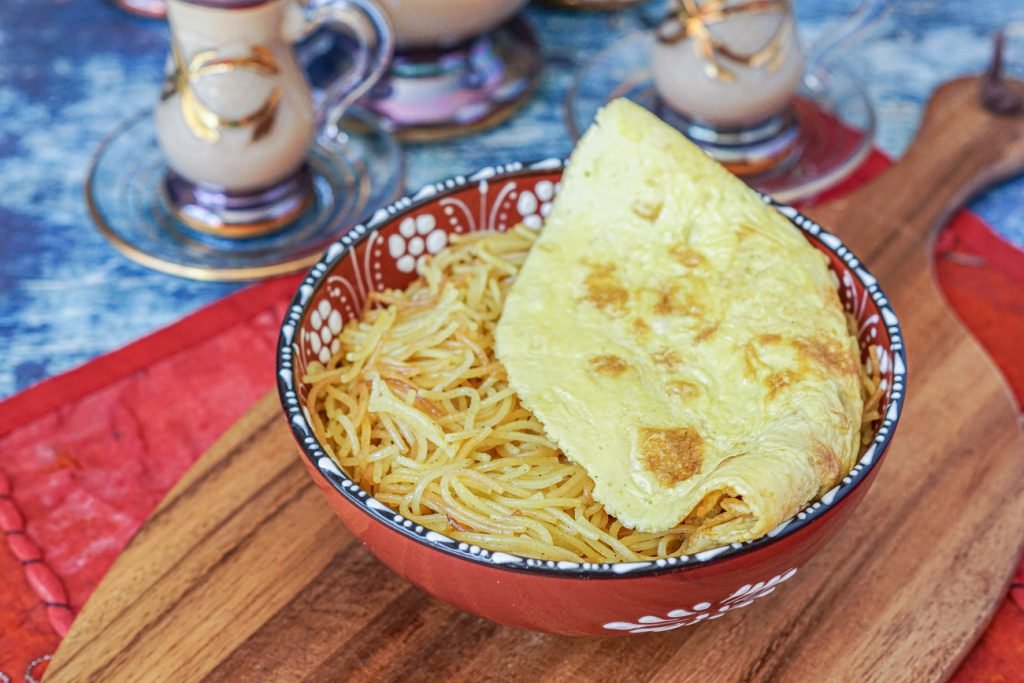
Balaleet (Sweet Vermicelli with Eggs)
Balaleet contrasts spiced, sweet vermicelli with a thin, savoury omelette. Cardamom and saffron create perfume, while ghee adds depth. It’s a beautiful example of Emirati food harmonising sweet and salty notes.
Khameer, Chebab & Regag (Breads and Pancakes)
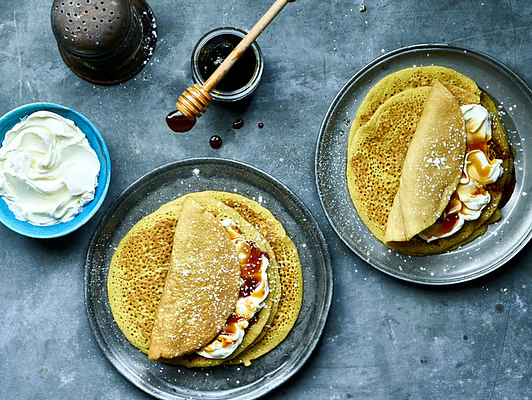
- Khameer: Puffy, yeasted bread slightly sweet and perfect with dates or cheese.
- Chebab: Golden breakfast pancakes scented with saffron.
- Regag: Paper-thin crispbread often folded with cheese, egg, or fish sauce.
These humble bites set the tone for the traditional food of UAE: frugal ingredients, clever technique, and generous hospitality.
Signature Rice Dishes: Festive, Fragrant, and Family-Style
Machboos (Majboos)
This cornerstone of UAE traditional food features rice simmered with meat or fish, onions, tomatoes, and a spice blend known as baharat. Dried limes contribute a tangy depth that makes machboos distinctly Emirati. Garnishes might include toasted nuts, raisins, or herbs.
Ouzi / Ghuzi
A celebratory platter of spiced rice crowned with slow-roasted lamb or goat. Almonds and pine nuts add texture, while saffron lends colour. When people speak about the traditional food of UAE, ouzi frequently tops the list because it epitomises sharing and abundance.
Biryani, the Emirati Way
Although biryani arrived via trade routes, it’s now woven into Emirati traditional food at home and in local restaurants. Expect aromatic layers, tender meat, and a gentle heat that never overpowers the rice.
Slow-Cooked Comforts: Heart of Emirati Traditional Food
Harees
Cracked wheat and meat are patiently cooked until creamy, then enriched with ghee. The flavour is subtle and deeply comforting. Many families prepare harees during Ramadan and on special occasions, highlighting its central place in the traditional food of UAE.
Thareed (Fareed)
Think of thareed as a bread-and-stew masterpiece. Crisp regag absorbs a tomato-based broth filled with vegetables and meat. The result is soft, savoury layers that speak to the soul of Emirati food, resourceful, nourishing, and communal.
Madrooba (Madrouba)
Fish or chicken is simmered with spices and thickened with flour until velvety. Every spoonful offers warmth and satisfaction, especially when served with ghee and pickles.
Coastal Heritage: Seafood Dishes You Shouldn’t Miss
Jasheed (Shredded Shark or Local Fish)
Traditionally made with small shark or similar fish, jasheed is boiled with spices, then shredded and sautéed with ghee and onions. Served with rice or bread, it showcases coastal ingenuity within UAE traditional food.
Samak Mashwi & Samak Magli (Grilled or Fried Fish)
Local species like hamour shine when simply seasoned and fire-grilled. Citrus, tahini sauces, and pickles round out the plate, letting the fish remain the hero of Emirati traditional food.
Maleh (Salted, Sun-Dried Fish)
Preserved fish reflects the old seafaring lifestyle. Thin slices or flakes bring deep umami to omelettes, stews, and salads an authentic taste of traditional food of UAE with bold, rustic character.
Market Snacks and Street Favourites
While many snacks trace their roots to regional neighbours, they now live comfortably beside Emirati traditional food.
- Samboosa: Crisp pastry triangles filled with meat, vegetables, or cheese.
- Khubz Tanoor: Hot tandoor bread, perfect with dips or grilled meats.
- Shawarma & falafel: Not Emirati by origin but beloved across the UAE.
These bites add colour to daily life and pair well with laban or karak tea.
Sweet Endings: Desserts That Define the Traditional Food of UAE
Luqaimat
Golden dumplings drizzled with date syrup and sprinkled with sesame seeds. Crisp outside and soft inside, luqaimat is a must-try during Ramadan and winter festivals, and a signature of Emirati traditional food.
Khabeesa
A semolina dessert toasted in ghee and scented with cardamom and saffron. It’s sweet, rich, and often served with coffee, linking dessert to the wider ritual of hospitality in UAE traditional food.
Aseeda & Sago Pudding
Aseeda is a warm, spoonable treat of flour, ghee, and honey. Sago pudding, meanwhile, offers a silky texture with hints of rose water light but fragrant, and beloved by many fans of Emirati food.
The Drinks Table: Hospitality in a Cup
- Arabic Coffee (Gahwa): Lightly roasted and perfumed with cardamom—and sometimes saffron. It’s poured into small finjal cups and offered alongside dates, anchoring the etiquette around traditional food of UAE.
- Karak Tea: Strong, milky, and spiced; widely enjoyed in the Emirates.
- Laban: A cooling yoghurt drink that balances spicy mains and summer heat.
Together, these beverages frame the dining experience and demonstrate everyday generosity.
Seasonal and Festive Dishes
Ramadan & Eid
During Ramadan, families serve harees, thareed, and luqaimat at iftar. For Eid, ouzi often takes centre stage, while platters of dates, nuts, and pastries welcome guests. These moments reveal how Emirati traditional food binds community and faith.
Weddings and Gatherings
Large trays of machboos or ouzi arrive with ceremony. Because the traditional food of UAE prizes abundance, hosts ensure every guest feels seen often encouraging second and third helpings.
Dining Etiquette: How to Eat with Respect
- Accept coffee with your right hand, and gently shake the cup to indicate you’re finished.
- Share generously and compliment the cook; gratitude is part of the meal.
- Dress modestly in traditional settings, and remove shoes if your host requests it.
- Avoid food waste; take smaller portions first and return for more.
These customs protect the spirit of hospitality that sustains UAE traditional food.
Where to Try It
You can experience Emirati food in several settings:
- Traditional restaurants and heritage quarters: Enjoy homestyle plates of harees, thareed, and machboos.
- Cultural experiences and majlis-style meals: Learn etiquette, coffee rituals, and the stories behind Emirati traditional food.
- Modern Emirati kitchens: Contemporary chefs reinterpret classics while respecting flavour.
Wherever you go, ask staff for their favourite dishes locals love to share recommendations.
Cook Emirati at Home: Practical Tips
- Stock the essentials: Dried limes, saffron, cardamom, cinnamon, and ghee.
- Master rice technique: Rinse basmati well and steam gently for separate grains.
- Layer flavour: Bloom spices in ghee, then add onions, garlic, and tomato.
- Go low and slow: Many traditional food of UAE recipes benefit from long, gentle heat.
- Balance the plate: Pair rich mains with crisp salads, pickles, and laban.
- Finish thoughtfully: Nuts, raisins, and herbs bring fragrance and crunch.
These simple habits produce satisfying results that honour UAE traditional food at home.
Health and Dietary Notes
The traditional food of UAE offers many naturally wholesome elements—lean grilled fish, fibre-rich dates, legumes, and spice-forward broths. Choose ghee in moderation and favour steaming, grilling, or baking when possible. Moreover, many dishes adapt well to modern preferences: swap white rice for brown, reduce salt, or add seasonal vegetables to stews for extra nutrients.
Family-Friendly Favourites
For children and mixed palates, start with:
- Balaleet for gentle sweetness and familiar textures.
- Grilled fish with lemon and herbs.
- Machboos with mild spice and soft, aromatic rice.
- Luqaimat as a special treat perfect for celebrations.
These plates introduce Emirati traditional food in a fun, approachable way.
20 Iconic Dishes at a Glance
- Balaleet
- Khameer
- Chebab
- Regag
- Machboos (Majboos)
- Ouzi / Ghuzi
- Harees
- Thareed (Fareed)
- Madrooba
- Saloona (Home-style stew)
- Jasheed
- Samak mashwi (grilled fish)
- Maleh
- Khabeesa
- Luqaimat
- Aseeda
- Sago pudding
- Arabic coffee with dates
- Laban (yoghurt drink)
- Pickles and simple salads (classic sides in Emirati food)
Use this list as your tasting roadmap to the traditional food of UAE.
FAQs About UAE Traditional Food
Is Emirati food spicy?
Not usually. Emirati food focuses on fragrance cardamom, saffron, and dried limes rather than chilli heat. You can request more heat if you prefer.
What is the national dish of the UAE?
Many consider machboos and harees national symbols. Both are pillars of UAE traditional food, served at family gatherings and festivals.
What should I try first?
Start with machboos, thareed, and luqaimat. These classics capture the essence of Emirati traditional food with balanced spice and comforting textures.
Is there vegetarian Emirati food?
Yes. Thareed can be made with vegetables, and saloona offers meat-free versions. Salads, breads, rice, and desserts also provide variety within traditional food of UAE.
How is Emirati coffee different?
Arabic coffee is lightly roasted, spiced with cardamom, and poured into small cups. It pairs with dates and frames the hospitality at the heart of UAE traditional food.
Final Thoughts: Savouring the Traditional Food of UAE
From bread-and-stew thareed to celebratory ouzi, the traditional food of UAE tells stories of trade, endurance, and generosity. Each plate reflects the land and the sea, yet welcomes influences from neighbours with grace. When you sit down to Emirati traditional food, you taste far more than ingredients—you share a living heritage. So, begin with machboos, end with luqaimat, sip Arabic coffee in between, and let UAE traditional food guide your culinary journey.
